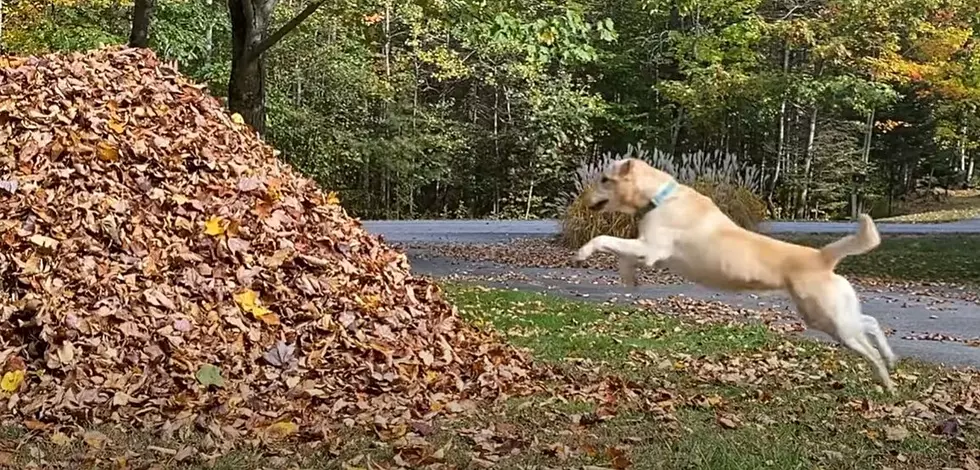
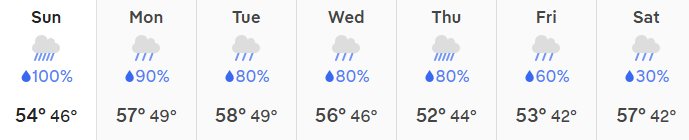
Portland fall leaf cleanup moves to the top of the list this week, because we're looking at roughly 2 inches of rain across seven days, and matted wet leaves on a lawn turn to slime fast. If your bigleaf maples just dumped their load over the weekend, Saturday is the one dry window you've got to deal with it.
This Week's Action List
- 1
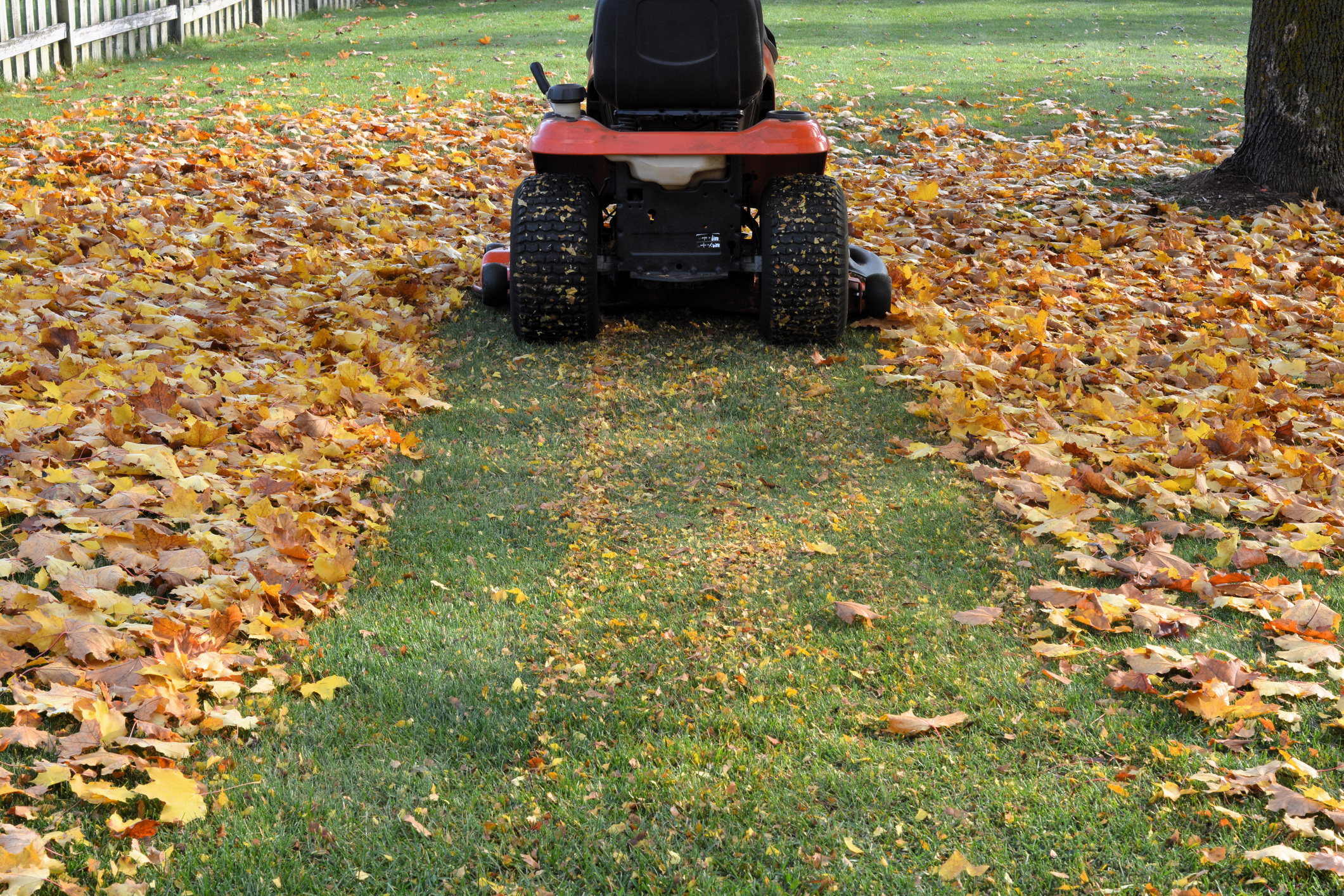
Get leaves off the lawn before they sit wet for more than three or four days. A matted layer blocks light and air, and you'll be looking at bare patches by February. A mulching mower set high will shred lighter layers right into the turf as free nitrogen, but if you've got a deep ankle thick pile, rake or blow it off first.
- 2
Shredded leaves are the single best free mulch Portland offers, so don't bag them for the curb. Pile them 3 to 4 inches deep over perennial beds, around shrubs, and on top of garlic that went in last month. Whole leaves mat and shed water, which is why running the mower over the pile first makes such a difference.
- 3
Saturday October 31 is the only day this week with a real dry window, 9 percent precipitation chance and a high near 56. That's your day for the big rake out, dormant copper spray on fruit trees and roses if you've got black spot or peach leaf curl history, and any irrigation blowout you haven't finished yet.
- 4
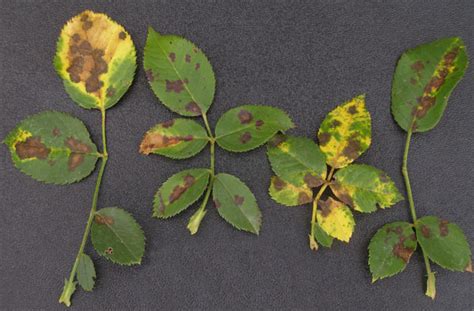
Keep raking rose beds clean right through leaf drop. Every black spotted leaf you leave on the ground is next year's infection pressure, and this is still the single most effective disease prevention job you'll do all year. Green bin, not compost, because home piles rarely hit the temperature that kills the spores.
- 5
If you haven't drained hose bibs, drip lines, and rain barrels yet, do it before Thursday night. Lows drop to 44 by Thursday and 42 by Saturday, which isn't a hard freeze, but Portland's first 28 degree night can land any time after October 15 and you don't want to be out there in the dark with a headlamp.
- 6
Dormant pruning on apples, pears, and plums is open now that leaves are dropping, but hold off this week unless you catch Saturday dry. Making fresh cuts right before three straight days of rain invites exactly the fungal problems you're trying to avoid. Pears especially resent wet wounds.
- 7
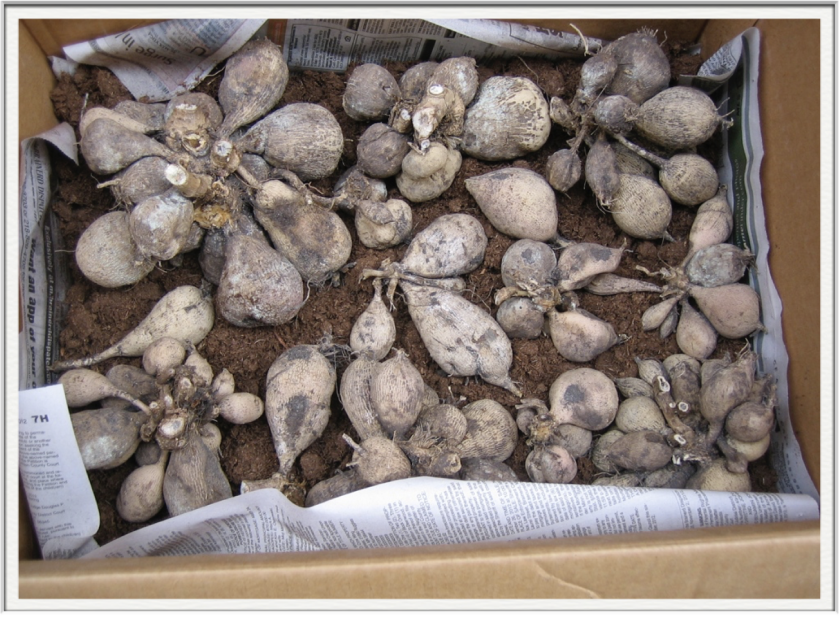
Check stored dahlia tubers now if you lifted them earlier this month. Any soft spots get trimmed back to clean flesh with a sharp knife, dusted with powdered sulfur, and set back in dry peat or vermiculite at 40 to 50 degrees F. One rotten tuber in a bin can take the whole stash down by January.
- 8
You can still get tulips, alliums, and muscari in the ground this week, even in the rain, as long as your soil isn't actually standing in water. Tulips in particular want to go in late, so this is prime time. Plant them 6 to 8 inches deep, pointy end up, and skip the bone meal if squirrels are a problem in your neighborhood.
- 9
Bring clay and terracotta pots under cover before the first hard freeze. Water inside the clay expands when it freezes and cracks the pot from the inside out, and you won't notice until spring when the whole thing falls apart in your hands. Glazed and plastic can stay out.
Frequently Asked Questions
What should I do with all the fallen leaves in my Portland yard?
Shred them with a mulching mower and spread them 3 to 4 inches deep as mulch on perennial beds, vegetable beds, and around shrubs. Leaves from diseased plants like roses with black spot should go in the city green bin instead, since home compost rarely gets hot enough to kill fungal spores. Whatever you do, don't let whole leaves sit matted on the lawn for more than a few days.
Is it too late to plant tulip bulbs in Portland in late October?
Late October is actually ideal for tulips in Zone 8b, since they need cold ground to bloom well and planting too early can encourage early sprouting. You've got through late November to get them in before soil cools too much to root. Plant 6 to 8 inches deep in a spot with decent drainage, because tulips rot fast in Portland's wet winter clay.
When is the first hard freeze in Portland Oregon?
Portland's average first hard freeze of 28 degrees F or below lands around November 15, but it can hit any time after October 15, which is why irrigation winterizing and clay pot storage should be done by late October. This week's lows stay in the mid 40s, so there's no immediate frost threat, but you're on borrowed time.